

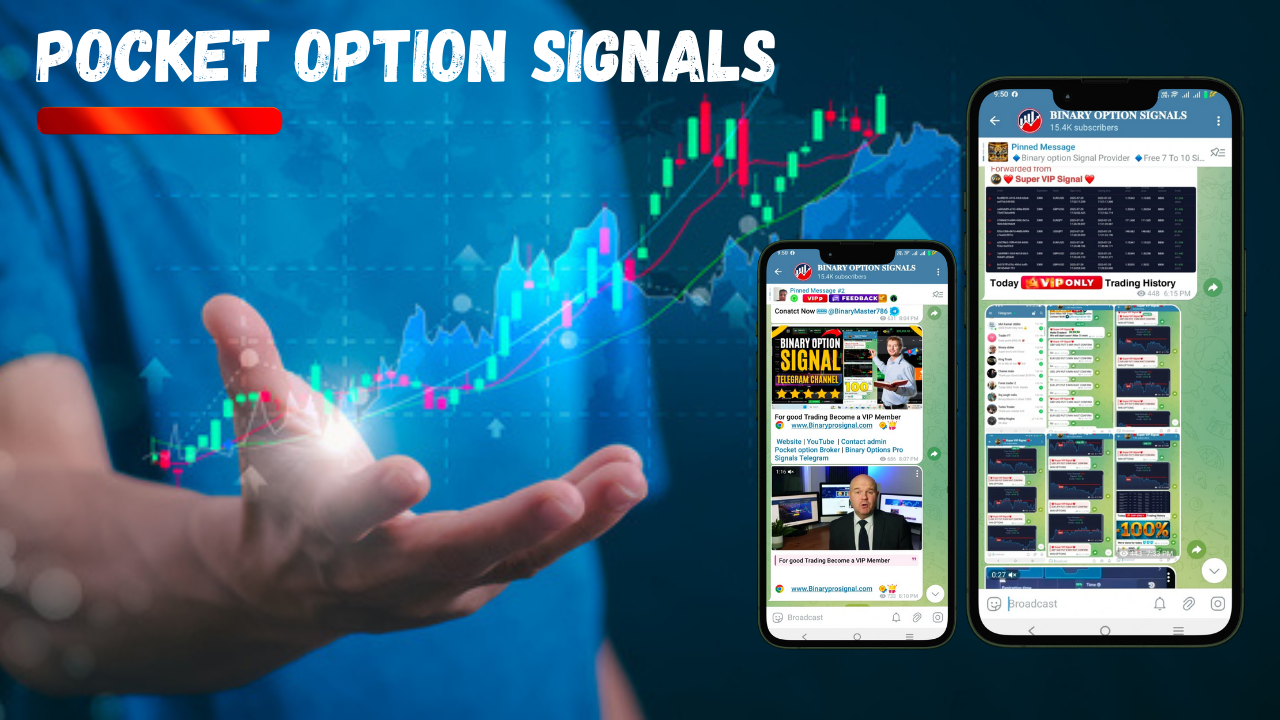

Pocket Option signals have come one of those trading motifs that everyone talks about, but truly numerous truly understand. Scroll through Telegram, YouTube, or trading forums and you’ll see screenshots of winning trades, bold claims of “ 90 delicacy, ” and pledges of fast earnings with nearly zero trouble. For someone new to trading, it feels like discovering a thruway through a complicated maze. Why struggle to learn charts when someone else can just tell you what to trade?
But the honest verity Pocket Option signals are neither magic nor scams by dereliction.
They’re tools. And like any tool, their value depends entirely on how you use them. A hammer can make a house or smash a window it’s not the hammer’s fault. Signals work the same way.
This composition is written to feel like a discussion with someone who has actually spent time in the request. No hype. No robotic explanations. Just a realistic, practical breakdown of what Pocket Option signals are, how they work, and how real dealers use them without destroying their accounts. If you’ve ever wondered whether signals are worth your time or why they occasionally work and occasionally fail — you’re in the right place.
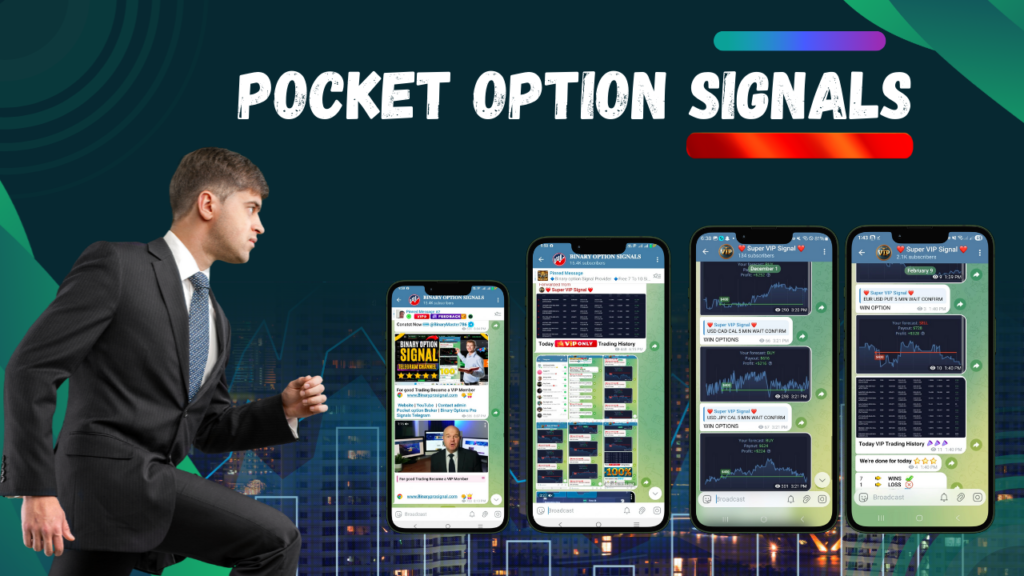
Understanding Pocket Option Signals from the Ground Up
At their simplest position, Pocket Option signals are trade suggestions. They tell you three main effects
Which asset to trade
Whether to buy or vend
When the trade should expire
That’s it. No complicated slang on the face. But underneath that simplicity lies a lot of analysis, probability, and decision- timber. Signals live because requests move in patterns — not impeccably, but frequently enough to produce openings.
Think of signals like rainfall vaticinations. A cast does n’t guarantee rain, but if meteorologists say there’s an 80 chance, you’d presumably carry an marquee. Signals work on the same sense. They’re not pledges; they’re probability- grounded opinions backed by data.
numerous dealers calculate on Pocket Option signals because
They save time
They reduce analysis load
They give structure
For newcomers, signals can act like training bus. For educated dealers, they’re frequently used as evidence. The mistake happens when dealers treat signals as commands rather than suggestions. The request does n’t watch about your signal it will do what it wants.
How Pocket Option Signals Are Generated
Behind every signal is a process. occasionally that process is simple; occasionally it’s incredibly complex. But no licit signal appears aimlessly. It starts with request data price movements, volume, trends, and literal geste
.
Most Pocket Option signals are generated using
Specialized pointers
Price action patterns
Statistical probability
request timing models
For illustration, if an asset has been falling for a while and reaches a strong support position while instigation pointers show prostration, a steal signal might be generated. The expiry time is also chosen grounded on how long that brio is anticipated to last.
Timing is everything in double options. You can be right about direction and still lose if the expiry is wrong. That’s why good signals concentrate heavily on when, not just what. Understanding this alone can change how you view signals — from eyeless instructions to informed vaticinations.
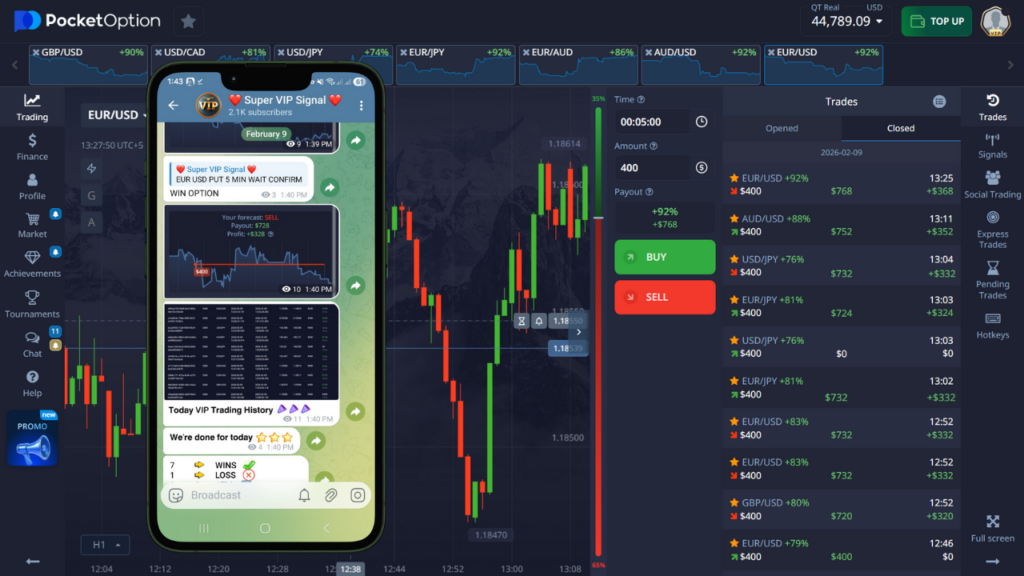
Different Types of Pocket Option Signals Explained
Not all signals come from the same source, and knowing the difference matters further than utmost dealers realize.
Homemade signals are created by mortal dealers assaying maps. These signals frequently come with explanations, which makes them precious for literacy. still, humans get tired, emotional, and detracted. That can affect thickness.
Automated signals are generated by software using fixed rules. They’re presto, harmonious, and impassive. The strike is severity — when request conditions change, automated systems can struggle.
AI- grounded signals sit nearly in the middle. They acclimatize, learn, and acclimate grounded on data. They’re important, but generally precious and not always transparent.
Each type has pros and cons. There’s no “ stylish ” option — only what fits your trading style and experience position.
Free Pocket Option Signals Reality vs prospects
Free Pocket Option signals are far and wide. Telegram groups, disharmony waiters, forums you name it. For newcomers, free signals are tempting because there’s no fiscal commitment. But free does n’t mean useless, and it does n’t mean good moreover.
The reality is mixed. Some free signals are authentically helpful, frequently used as marketing tubes for paid services. Others are rushed, inconsistent, or participated without proper analysis. The biggest issue with free signals is n’t delicacy it’s responsibility.
When using free signals, understand this
They may stop without notice
Losses are infrequently bandied
threat operation is frequently ignored
Free signals are best treated as practice tools, not income sources. Use them to observe patterns, compare results, and learn how signals bear in real request conditions.
Paid Pocket Option Signals What You’re Actually Paying For
When dealers pay for Pocket Option signals, they’re not just paying for entries. They’re paying for structure, discipline, and time- saving. At least, that’s how it should be.
A good paid signal service generally offers
Clear rules
proved results
harmonious timing
Support and education
What you’re really buying is decision reduction. rather of constantly wondering what to trade, you follow a predefined plan. That alone can reduce emotional trading.
still, paid does n’t automatically mean profitable. numerous services vend confidence rather of results. The smart approach is dubitation
combined with testing. noway trust words — trust data.
Core pointers Behind Pocket Option Signals
Most Pocket Option signals calculate on a small group of proven pointers. These tools do n’t prognosticate the future, but they help identify high- probability moments.
Moving pars help define trend direction. When price aligns with the trend, signals tend to perform better.
RSI measures instigation and helps spot prostration. It’s especially useful in short- term trades.
MACD highlights changes in instigation and trend strength.
Support and resistance situations act like cerebral walls where price frequently reacts.
The strongest signals combine multiple pointers. One index is a hint; three aligned pointers are a discussion.
Why Telegram Dominates Pocket Option Signals
Telegram is n’t popular by accident. It delivers dispatches incontinently, supports large groups, and creates a sense of community. For signals, speed matters and Telegram delivers.
But psychology plays a part too. Seeing others win creates confidence. occasionally too important confidence. That’s why Telegram is also full of inflated results and emotional hype.
Red flags to watch for
Guaranteed gains
Deleted losing signals
Pressure to upgrade fast
A good Telegram signal group feels calm, not hopeless.
Signal Accuracy The Truth nothing Likes to Hear
Everyone asks about delicacy. veritably many understand it. A 70 accurate signal system can be profitable — or disastrous — depending on how it’s used.
delicacy alone means nothing without
threat operation
thickness
Emotional control
Losses are n’t failure. They’re part of the system. Dealers who accept this last longer than those chasing perfection.
Step- by- Step How to Use Pocket Option Signals rightly
Using signals duly is a process, not a response. Preparation matters.
Choose a dependable signal source
Match the asset and timeframe
Confirm request conditions
Execute calmly
Record the outgrowth
The journal step is something that most people who sell things do not pay attention to and the journal step is really the important part. The journal step is what matters the most when it comes to the journal step. People should not ignore the journal step because the journal step is very important.
threat operation When Trading Pocket Option Signals
Signals do n’t manage threat — you do. This is where accounts survive or die.
introductory rules
threat small
Avoid emotional trades
Stop after losses
threat operation is boring. It’s also the reason professionals stay in the game.
Psychological Traps When Using Signals
People do not think about how their mind works when they use Pocket Option signals. They think that if someone else is telling them what to do they will not feel anything.. That is not true. They will still feel things it is just that these feelings will come out in ways when they use Pocket Option signals. Pocket Option signals are still a part of their trading. They need to think about how they feel when they use them.
The first big mistake people make is being too sure of themselves. When traders have a few trades in a row they start to get a little too comfortable. They begin to take risks ignore the rules they set for themselves or jump into trades at the wrong time because they think they are on a hot streak. The problem is not with the signals they are getting. The problem is, with the trader. The trader is the one who has changed. This kind of behavior is usually followed by a string of losses that takes away all the money they made before.
People often have a problem with something called revenge trading. This is what happens when a trader loses money on a trade. They then put money into the next trade trying to win back what they lost really fast. The thing is this turns a plan into a gamble based on emotions. Trading signals are based on chances and chances mean you will sometimes lose money. Trying to fight this fact only makes your situation worse. Trading signals are all about probability and probability means you will have losses, with the trading signals.
There is also a fear of missing out when it comes to the fear of missing out. In fast Telegram groups the signals come quickly. The traders rush to enter trades without checking the expiry time of the signals or the asset because they are afraid they will miss the one. This leads to execution of the signals, which ruins even the good signals from the Telegram groups. The fear of missing out affects the traders and the way they execute the signals, from the Telegram groups.
The solution is not complicated. It is not easy either. Slow down. You should treat every trade as a trade. Signals work well when you are calm not when you are anxious. If you can control your psychology then signals are, like tools that help you. If you cannot control your psychology then signals become like triggers that can get you into trouble.
Are Pocket Option Signals Legal and Safe?
People who trade should always think about if something’s legal and safe. But a lot of them do not. The signals from Pocket Option are usually legal. However the rules are different depending on the country you’re in. These signals are really a way to teach you something or give you some information. They are not telling you what to do with your money in most places. That is why the people who make these signals usually say something like “we’re not telling you what to do” so you know that Pocket Option signals are just that. Signals, from Pocket Option.
Safety is really important. It is not just, about following the law. The big dangers actually come from:
Sharing account access
Using unknown third-party apps
Falling for “account management” offers
A real signal provider will never ask you for your login information. Signal providers give you advice on what to do, with your money. They do not do it for you. If someone wants to use your account to trade for you that is a sign. Signal providers just tell you what to do they do not make the trades for you.
Pocket Option is a platform that gives you demo accounts and security features. It also has risk warnings. To use signals in a way you need to combine the security of the Pocket Option platform with your own self control. You should protect your Pocket Option account like you protect your wallet because it is basically the same thing.
How to Build Your Own Pocket Option Signals
Creating your Pocket Option signals is where traders become independent thinkers and stop following others.
This is not about making something that’s hard to understand it is, about making something that works every time.
Your Pocket Option signals should be consistent that is what matters when you are making your Pocket Option signals.
Start with the basics:
One asset
One timeframe
Two or three indicators
For example you might use a moving average to see which way things are going the RSI to get a sense of momentum and support and resistance to figure out times to get in. When the moving average and the RSI and support and resistance all say the thing that is when you make your own decision to buy or sell and that is your own signal, from the moving average and the RSI and support and resistance.
The real work happens when you are testing. You need to go through all the charts. Then you have to record your results. After that you should adjust the rules of your strategy slowly.
Most traders do not like to do this because it’s very boring.. Professionals always do this because testing really works for the trading strategy. They know that testing is an important part of the trading process.
Building your signals does not mean you have to stop using signals from other people. A lot of traders who have been doing this for a time, like to compare the signals they make themselves with signals they get from other places.
When the signals you make yourself and the external signals are the same you will feel more confident.
That is when the signals are not just guesses they are decisions based on your own signals and the external signals. Your own signals and the external signals work together to help you make these decisions.
Pocket Option Signals for Beginners
For people who are just starting out keeping things is the best way to succeed. The biggest mistake that new traders make is trying to use a lot of signals or indicators or strategies all at the same time. New traders make this mistake. It leads to confusion and they do not do things the same way every time. New traders need to remember that simplicity is key when it comes to trading.
Beginner-friendly rules:
Trade small amounts
Use one signal source
Focus on learning, not earning
Demo accounts are really helpful. You should try out signals with a demo account. See how the signals work when the market is good and when it is bad. It is also very important to pay attention to the times when you lose money with the signals. The demo accounts and signals will teach you more from the losses with the signals than from the wins, with the signals.
When you look at signals think of them as lessons not as ways out. After you make a trade ask yourself these questions: Why did the trade work out? Why did it not work out? It is this kind of curiosity that helps people who’re new, to trading become real traders. Signals are what help you learn and get better at trading if you use them to learn from your mistakes.
Pocket Option Signals for Advanced Traders
People who trade a lot use Pocket Option signals in their way. They do not just follow these signals. They check them carefully. For these traders Pocket Option signals are, like an opinion, not something that tells them what to do.
An advanced trader might:
Ignore signals during news events
Compare signals across timeframes
Adjust position size based on confidence
At this level the signals are part of a system that includes how the market is set up how much the prices are moving around and what the person has learned from doing this before. The person who is trading will still have times when they lose money.. They know when to expect these losses and they are okay with that because they are, in control of what is happening with the signals and the market.
For advanced traders, the biggest value of signals is efficiency. They reduce screen time and help spot opportunities faster. Used correctly, signals don’t replace skill—they enhance it.
Pros and Cons of Pocket Option Signals
When you use Pocket Option signals they have some things about them and some not so good things. Pocket Option signals are, like any tool you use to trade. They can help you. They also have limitations. You should know what Pocket Option signals can and cannot do for you.
Pros
Save time
Provide structure
Helpful for beginners
Reduce analysis overload
Cons
Can create dependency
The quality is really different from one thing, to another. Sometimes the quality is very good. Sometimes it is not so good. The quality varies a lot.
When you do not manage risks well it can really mess up the results of the things you do. Poor risk management is something that can totally ruin your results.
You have to be careful, with risk management because it can affect the results of your projects and plans. Poor risk management can make things go wrong and that is why it is so important to get it right.
Signals are not good or bad. They are signals. What happens next depends on the person who is trading with the signals. The signals themselves do not decide if something is good or bad. The trader using the signals is the one who makes the decisions. Signals are there to help the trader.
The Future of Pocket Option Signals
The future of Pocket Option signals is really coming together. We are seeing artificial intelligence and machine learning being used. Also automation is becoming a part of it. Pocket Option signals are getting faster. They can adapt to things more easily. They are also based on a lot of data which is making Pocket Option signals more reliable.
No matter how good technology gets people will still be people. They will still feel fear and greed when they trade. Some people will be patient and disciplined. That will affect how well they do. The way people think and feel about trading will always be important no what kind of signals they use. Trading psychology is what really matters in the end it is the filter for trading results and that is why trading psychology will always be the key, to success.
The traders who do well in the future will not be the ones, with the signals. The traders who do well will be the ones who know how to use the signals in a way. They need to understand how to use the signals. The traders need to use the signals in a way that makes sense for them and helps them make decisions.
Pocket Option signals are really helpful if you know how to use them.. If you do not understand them they can be bad for you.. If you use them too much they are not good for anything. Pocket Option signals do not make you rich quickly. They are tools that help you learn and do things in a better way. If you are new to trading Pocket Option signals can help you learn. If you are a trader Pocket Option signals can help you make sure you are making good choices. To be good at trading with Pocket Option signals you need to be careful and make decisions. You also need to have the mindset and manage your risks. Pocket Option signals are useful, for people who trade. You have to use them correctly.
You should think of signals like a compass, not something that does all the work for you. Signals are there to help you so you need to look at them ask yourself if they make sense and then use them to make your trading decisions. When you do that the signals from Pocket Option can be really helpful, to you of causing problems. Pocket Option signals can be a thing if you use them correctly.
FAQs
1. Are Pocket Option signals reliable?
Investments can be good. How reliable they are depends on the investment provider, the state of the market and how you manage the risk of investments. The reliability of investments really depends on these things like the provider of investments and the market conditions of investments.
2. So people who are just starting out want to know if they can really make money using these signals. The thing is, beginners with signals can actually make money because the signals are, like a guide for the beginners to follow and the beginners using these signals can learn how to make decisions and make money.
People who are just starting out should really focus on learning about trading. They should use trade sizes when they do start trading with the trade sizes. This way the beginners can get a feel, for how the trade sizes work and not lose a lot of money with the trade sizes.
3. Are signals really worth using when it comes to the signals themselves? I mean can you actually trust signals to do what they are supposed to do, which is to provide you with good information or are free signals not that great after all?
These things are useful for practice and, for observation. The consistency of these things varies.
4. What kind of accuracy can I really expect from the signals?
Anything above 60% can be profitable with proper risk management.
5. Is it an idea to use only Pocket Option signals when I am making decisions? I mean should I really rely on Pocket Option signals?
No. Signals work best when combined with basic market understanding.

Leave a Reply