


Pocket Option signals are professional trade alerts that guide traders on when to open and close positions on the Pocket Option platform. These signals are based on technical analysis, price action, trend confirmation, and market momentum. A typical signal includes:
- Asset (e.g., EUR/USD, GBP/JPY, Gold)
- Direction (CALL or PUT)
- Expiration time (1 minute, 5 minutes, etc.)
- Entry time
- Risk management guidance
Signals help traders avoid emotional decisions and trade with structured strategies instead of guesswork.
How Pocket Option Signals Work
Professional signal providers analyze charts using multiple indicators and trading strategies before sharing alerts. Once a signal is sent, traders simply:
- Open the Pocket Option platform
- Select the mentioned asset
- Choose the specified expiration time
- Enter the trade at the correct time
Timing precision is critical in binary options trading, so execution speed directly affects results.
Types of Pocket Option Signals
1. Manual Trading Signals
These are generated by professional traders who manually analyze charts. They rely on:
- Support and resistance levels
- Candlestick patterns
- RSI (Relative Strength Index)
- MACD crossovers
- Trendline breakouts
Manual signals often focus on high-probability setups rather than volume.
2. Automated Signals (Trading Bots)
Automated systems scan the market using algorithms. These can produce frequent signals but require proper filtering to avoid low-quality trades.
3. VIP Signals
Premium signals usually include:
- Higher accuracy setups
- Detailed explanations
- Risk management rules
- Live trading sessions
- Mentorship support
VIP groups typically focus on consistent growth instead of aggressive trading.

Advantages of Using Pocket Option Signals
Time Saving
Traders do not need to analyze charts all day.
Structured Trading
Signals follow a consistent format, reducing confusion.
Learning Opportunity
By observing repeated setups, traders improve their own technical analysis skills.
Better Risk Control
Professional signals include capital management instructions to prevent large losses.
Risk Management Strategy for Signal Trading
Even the best signals cannot guarantee 100% success. Proper money management is essential.
Use the 2% Rule
Example:
- Account balance: $500
- Risk per trade: $10
This protects your account from heavy drawdowns.
Set Daily Limits
- Stop trading after reaching 5–10% profit
- Stop trading after 3 consecutive losses
Discipline protects profits.
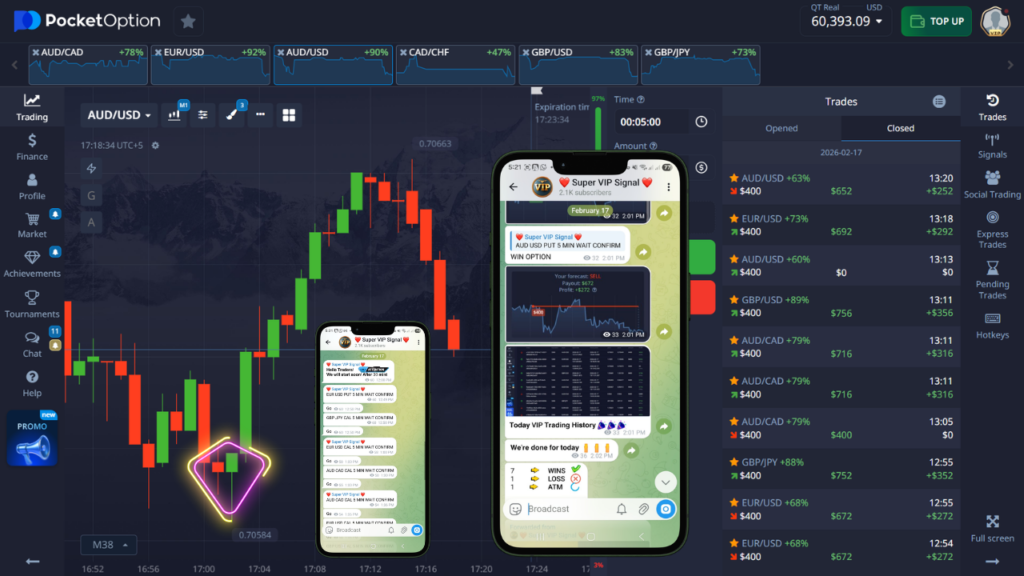
Best Time to Use Pocket Option Signals
Signals perform best during high volatility sessions:
- London Session
- New York Session
- Major market overlap periods
Avoid low volatility hours when price moves sideways.
Common Mistakes Traders Make
- Entering trades late
- Increasing trade size after losses
- Ignoring expiration time
- Overtrading
- Trading without following instructions
Consistency and discipline determine long-term success.
How to Choose the Best Pocket Option Signal Provider
Before joining any signal group, check:
- Transparent trade history
- Real performance reports
- Honest loss reporting
- Clear signal format
- Strong community feedback
Avoid providers promising unrealistic win rates like 95%–100% accuracy.
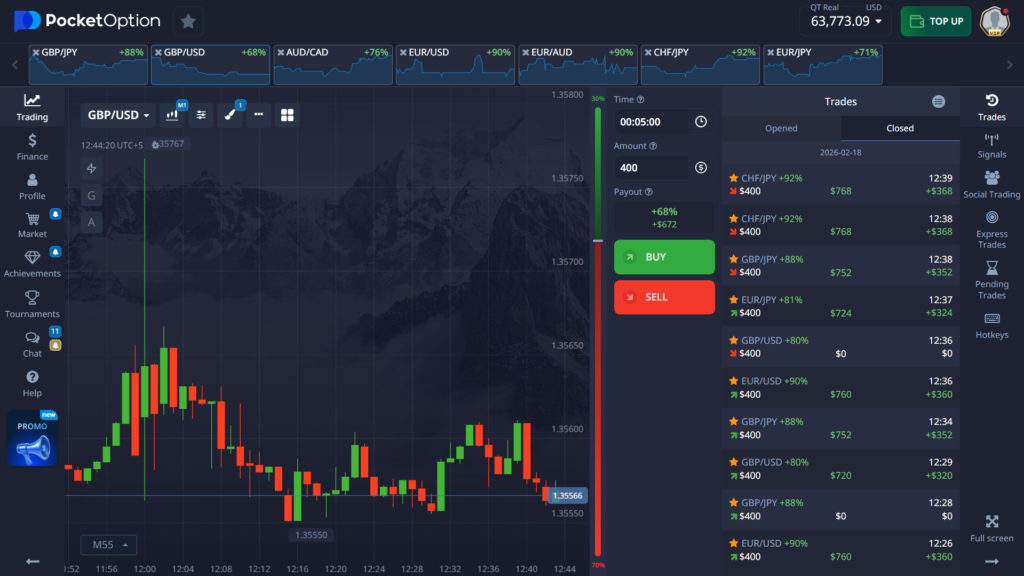
Are Pocket Option Signals Suitable for Beginners?
Yes, but beginners should:
- Practice on a demo account first
- Start with small investment
- Follow strict risk management
- Focus on learning, not quick profits
Signals should be used as guidance, not as a shortcut to instant wealth.
Final Thoughts
Pocket Option signals can significantly improve trading structure when used correctly. With disciplined execution, proper capital management, and realistic expectations, traders can achieve consistent results over time. Success in signal trading depends not only on signal quality but also on how effectively traders follow the strategy.

Leave a Reply